Using Review Signals in Commercial Research
A practical Gulf Markets article explaining how teams can use Gulf business data in structured, testable workflows.
Using Review Signals in Commercial Research is a practical question for market researchers, agencies, sales teams, and analysts using public reputation data. In Gulf markets, the quality of a business dataset is measured by what a team can do with it after export: segment accounts, assign ownership, brief outreach, and identify the next best action. A file can look impressive because it has thousands of rows, but the real value appears when the records help a commercial team make decisions with less uncertainty.
The central issue is that review signals can add commercial context, but they need interpretation before they influence account selection. That means teams should evaluate data as an operating asset, not as a static directory. Before a campaign starts, the dataset should answer three questions: who is relevant, why they belong in this segment, and which evidence supports the first contact attempt. If those answers are unclear, sales teams will spend their time repairing the list instead of using it.
What the team is really deciding
The immediate decision is how review volume, rating patterns, and listing activity should affect segmentation. That decision should be made before the list reaches a CRM, an outbound tool, or an analyst building a market sizing model. Once low-quality records enter an operating system, the cost of correction increases. People create duplicate accounts, add manual notes, change category labels, and make local assumptions that are hard to audit later.
A professional review starts with the business question. Are you trying to size a market, launch outbound sales, enrich a CRM, shortlist partners, or compare city-level coverage? Each use case needs a slightly different tolerance for missing fields. A market-sizing brief can sometimes tolerate weaker contact coverage, while an outbound campaign needs phone, website, location, and category fields to be reliable enough for daily use.
Signals that separate usable data from raw listings
The strongest datasets expose practical signals: review count, rating distribution, recency, category norms, city comparisons, and consistency with other public signals. These signals help teams understand whether a record is actionable now, needs enrichment, or should be excluded from the first campaign. They also make quality discussions concrete. Instead of saying a list is good or bad, a team can point to field coverage, duplicate rates, classification consistency, and the share of records that meet the campaign threshold.
For example, a restaurant with many reviews may indicate strong consumer visibility, while a B2B industrial supplier may have few reviews but still be commercially important. This kind of distinction changes the workflow. The first group may be ready for sales development. The second may need research. A third group may be useful only for market mapping. Treating all three groups the same weakens messaging and makes campaign results harder to interpret.
A practical review workflow
Teams can review a dataset in four passes. The first pass checks scope: countries, cities, categories, and whether the list matches the intended audience. The second pass checks field coverage, especially contact fields and digital presence signals. The third pass checks consistency: category labels, duplicate businesses, city names, and unusual formatting. The fourth pass converts the list into operating rules, such as which records enter the first campaign and which records remain in research.
- Define the minimum usable record. Decide which fields must be present before a record can enter outreach.
- Separate research records from campaign records. Not every useful record is immediately ready for sales.
- Document exclusions. Explain why certain categories, locations, or low-signal records were removed.
- Review samples before scaling. A small sample often reveals taxonomy and field-quality issues faster than a full export.
Common mistakes to avoid
The most common mistake is treating reviews as a direct quality score without considering category, city, business age, or customer behavior. The second mistake is using one quality standard for every use case. A business directory, a lead list, a market-entry brief, and a CRM enrichment file are related, but they are not identical deliverables. The third mistake is ignoring operational ownership. If nobody owns the rules for deduplication, category mapping, and exclusions, quality will drift as soon as the list is shared.
Another risk is evaluating a dataset only at the aggregate level. A list may have strong overall coverage but weak coverage in the exact country, city, or category that matters most. That is why experienced teams review coverage by segment. They ask where the list is strong, where it is thin, and what additional enrichment is needed before decisions are made.
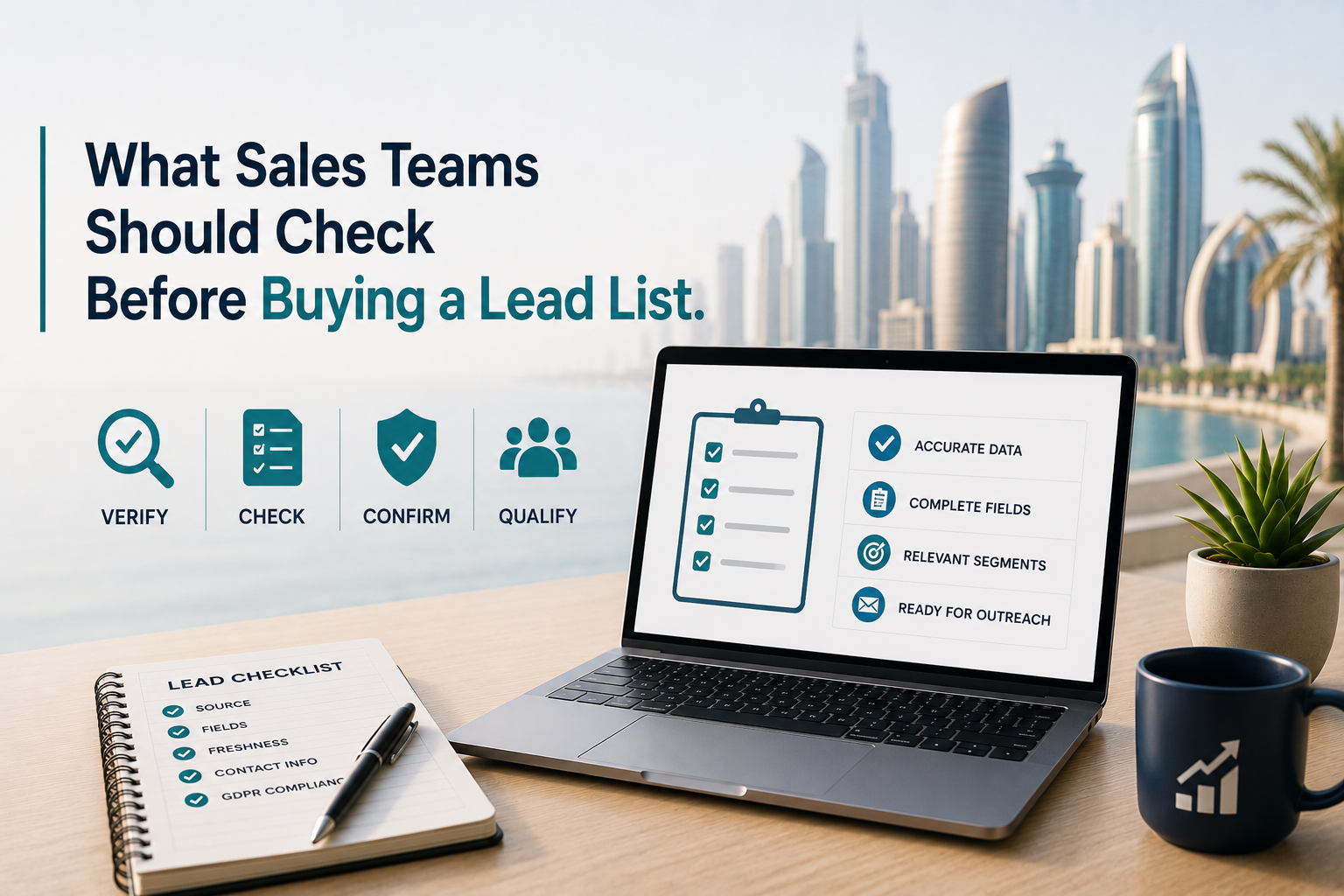
Quality checklist
| Review area | Professional question |
|---|---|
| Scope | Does the dataset match the target country, city, and business category? |
| Coverage | Which fields are strong enough for the intended workflow? |
| Segmentation | Can the team create meaningful account groups without manual rework? |
| Actionability | Which records are ready for campaign use today? |
| Governance | Are duplicate, exclusion, and enrichment rules documented? |
How GulfHex teams can apply this
A strong Gulf business-data workflow should end with a review-signal framework that improves research context without distorting account priorities. The goal is not simply to own more rows. The goal is to reduce uncertainty for the next team in the chain, whether that team is sales, marketing, partnerships, research, or operations. When data is structured around decisions, it becomes easier to brief campaigns, compare markets, and learn from results.
For teams ordering a custom dataset, this also creates a clearer request. Instead of asking for a broad file, they can define the target countries, categories, must-have fields, excluded segments, and the intended use case. That makes the final dataset easier to validate and more likely to support a measurable business outcome.
Professional data work is not about collecting every possible record. It is about shaping the right records into a workflow that a team can trust.
Conclusion
The best datasets are built backward from the decision they support. When teams define the segment, review coverage, document assumptions, and separate campaign-ready records from research records, business data becomes a strategic asset rather than a spreadsheet. That discipline is what turns Gulf market intelligence into practical commercial action.